What Is Better for a Complete Beginner in Crypto
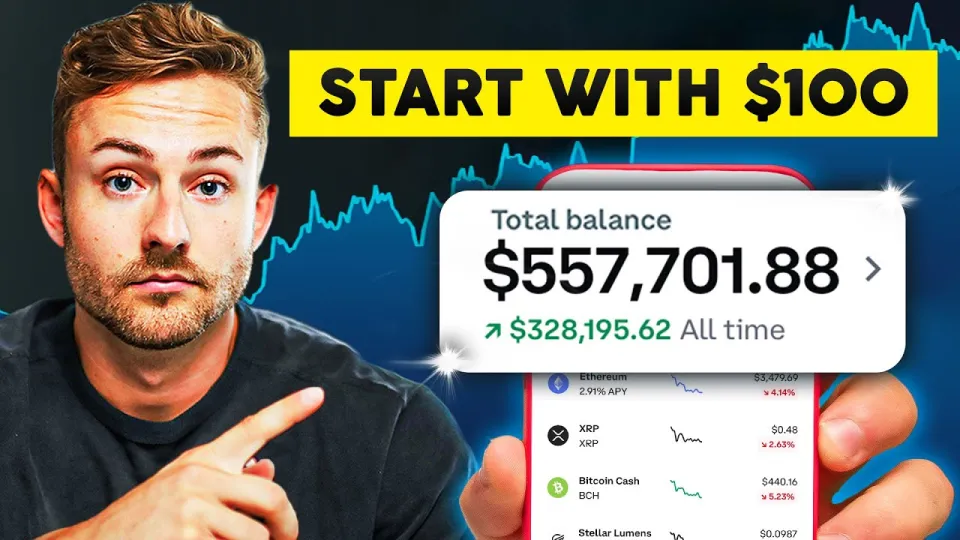
Video: How To Invest in Crypto as A COMPLETE Beginner [2025 GUIDE]
Need articles like this for your video? They help promote it on YouTube and Google — order them in the Telegram bot @sat_sit_bot. Articles with your video embedded are written and posted by the bot itself — on popular topical sites (no ads). Free trial — 50 articles.
Crypto for a complete beginner is better approached as a long-term spot portfolio than as active trading: buy established assets such as Bitcoin and Ethereum, hold them through a full cycle, and only study charts and leverage later with money you can afford to lose. The free beginner trading material linked at the free trading starter resources is a reasonable first stop before any capital leaves your account.
Why a long-term spot position beats day trading at the start
A spot position has no liquidation price, no funding fees and no time pressure, which is exactly what a new investor needs while learning. Active trading adds leverage, short timeframes and emotional decisions on top of an already volatile market; the skills required for it are learned over years, not weekends.
The video breakdown by Craig Percoco frames the opportunity honestly: crypto is an emerging market with generational wealth potential, but it is also an emerging market where most participants lose money. The realistic beginner path is to build a core holding first, then allocate a small, separate risk budget to trading experiments.
A simple structure that keeps the two activities apart:
- Core portfolio: 70-90% of crypto capital in Bitcoin and Ethereum, bought on a schedule and held.
- Learning budget: 5-10% used to place real trades in small size so mistakes cost little.
- Cash reserve: the remainder kept stable so a drawdown never forces a sale.
Crypto basics every beginner should understand before buying
A cryptocurrency is a digital asset recorded on a blockchain, a public ledger maintained by a network of computers rather than a single company. Bitcoin was the first, launched in 2009, and remains the largest by market value; Ethereum followed with smart contracts, which let developers build applications on top of the network.
Three concepts do most of the work for a beginner:
- Custody: coins held on an exchange are held by that exchange; a hardware wallet puts the private keys in your hands.
- Volatility: 30-50% drawdowns are normal in crypto, not signs that the market is broken.
- Liquidity: large coins can be sold instantly, small tokens sometimes cannot be sold at any reasonable price.
Exchange choice matters less than people think, but fees, withdrawal limits and available coins do vary. Regulated venues such as Coinbase are common first choices in the United States, while Bybit and similar platforms are popular for derivatives later on.
Fundamentals: what actually gives a coin value
Fundamental analysis in crypto means asking who uses the network, who pays for it, and how the supply is distributed. Tokenomics is the center of that question: total supply, circulating supply, emission schedule, unlock dates for early investors, and how much the team and venture backers hold.
A coin with a fixed cap and predictable issuance, like Bitcoin's 21 million limit, has a very different supply profile from a token that releases millions of new units every month to insiders. High inflation plus large unlocks is a structural headwind that no chart pattern can fix.
Beyond supply, check real usage: active addresses, transaction fees paid, total value locked in the protocol, and revenue if the project has any. A project with strong usage and a fair distribution deserves more attention than one with a large community and no product. Reading a project's documentation and token unlock calendar takes an hour and prevents most beginner mistakes.
Technicals: the minimum chart knowledge a beginner needs
Technical analysis is the study of price and volume to time entries and exits, and for a beginner it should stay simple. Candlestick charts show the open, high, low and close of each period; support is a price area where buyers have repeatedly stepped in, resistance is where sellers have capped rallies.
Useful basics, in order of importance:
- Higher timeframes: daily and weekly charts filter out noise that destroys beginners on five-minute charts.
- Trend: higher highs and higher lows mean an uptrend; trading against it is harder.
- Volume: a breakout on weak volume is usually a false one, a pattern many new traders learn the expensive way.
- Risk placement: a stop loss belongs below support, not at an arbitrary percentage.
TradingView is the standard charting tool used for this work, and a free account covers everything a beginner needs.
How to buy, sell and keep records without mistakes
Buying crypto is a four-step process: verify the exchange, complete identity checks, deposit fiat or stablecoins, and place a limit order rather than a market order when fees matter. A limit order at your chosen price avoids paying the spread in fast markets.
Selling deserves the same planning as buying. Decide in advance what would make you sell: a target price, a change in the project's fundamentals, or a rebalancing rule. Investors who never define an exit tend to sell in panic at the worst moment.
Record keeping separates serious beginners from gamblers. A simple spreadsheet with date, asset, amount, price, fees and the reason for the trade is enough. Reviewing it monthly shows which decisions worked and which were driven by emotion, and it is the cheapest performance review available.
Typical beginner doubts and what the comments reveal
Skepticism is the most common starting position, and it is healthy: many viewers say they do not fully understand crypto but want to learn before committing money. The answer is to size positions so that being wrong is survivable and to learn in public through notes and journals rather than through large bets.
The second recurring theme is frustration after trying many strategies, courses and webinars without results. That experience usually traces back to missing basics rather than missing secrets: no system, no patience, no discipline, no backtesting, no journaling, poor psychology and poor risk management. Fixing those seven items changes outcomes more than any indicator.
The third theme is the search for a mentor. A structured course or private community can shorten the learning curve, but it cannot replace screen time; treat any claim of guaranteed returns or effortless profits as a red flag, and remember that most people promoting spectacular gains in comment sections are advertising something.
All links from the video
- Free trading starter resources: https://bit.ly/3VHSOeT
- Crypto trading course and private team: https://bit.ly/3xhn47c
- Discord community access: https://bit.ly/3VmrO3r
- Full resources list: https://bit.ly/3zeM13u
- TradingView charting: https://bit.ly/3Xf9uvz
- Bybit exchange: https://partner.bybit.com/b/fortraders
Conclusion
For a complete beginner, the better choice is a long-term spot portfolio built on Bitcoin and Ethereum, with trading treated as a small, separate learning budget. Fundamentals such as tokenomics and supply matter more than chart patterns at this stage, and record keeping turns experience into skill. Craig Percoco, the author of the video breakdown, structures the journey from crypto basics through fundamentals and technicals to buying, selling and staying organized, which is a sensible order to follow. Start with the free trading resources, keep position sizes small, and let the first year be about learning rather than maximizing returns.
Key takeaways
- A beginner should start with a long-term spot portfolio of Bitcoin and Ethereum before attempting leveraged trading.
- Craig Percoco draws on seven years of trading and investing experience in his beginner breakdown of the crypto market.
- The guide is split into crypto basics, fundamentals, technicals, how to make money, how to buy and sell, and how to stay organized.
- Fundamental analysis covers tokenomics, supply schedules and real usage; technical analysis covers charts, support and resistance.
- Most beginner losses come from no system, no patience, no risk management and no trading journal.
Source: How To Invest in Crypto as A COMPLETE Beginner [2025 GUIDE] · Markdown version
Questions & answers
How much money do I need to start investing in crypto?
You can start with a very small amount, since most exchanges allow purchases of $10-50. What matters more is that the money is genuinely disposable: crypto can drop 30-50% and stay down for a long time, so never use rent, emergency savings or borrowed funds.
Should I buy Bitcoin only or add altcoins?
Bitcoin and Ethereum give a beginner the deepest liquidity and the longest track record, so they belong in the core of a portfolio. Smaller altcoins can be added later in small size, after you have read their tokenomics and understand unlock schedules and dilution risk.
Do I need a mentor or a paid course to trade crypto?
A structured course or community can speed up learning, but it is not a substitute for screen time and a written trading plan. Before paying anyone, check whether they teach risk management and record keeping, and treat guaranteed-profit claims as a warning sign.
Why do most beginners lose money in crypto?
The usual causes are trading without a system, no patience, no discipline, no backtesting, no journal, weak psychology and poor risk management. Leverage multiplies all of these mistakes, which is why spot holdings and small position sizes are the safer starting point.